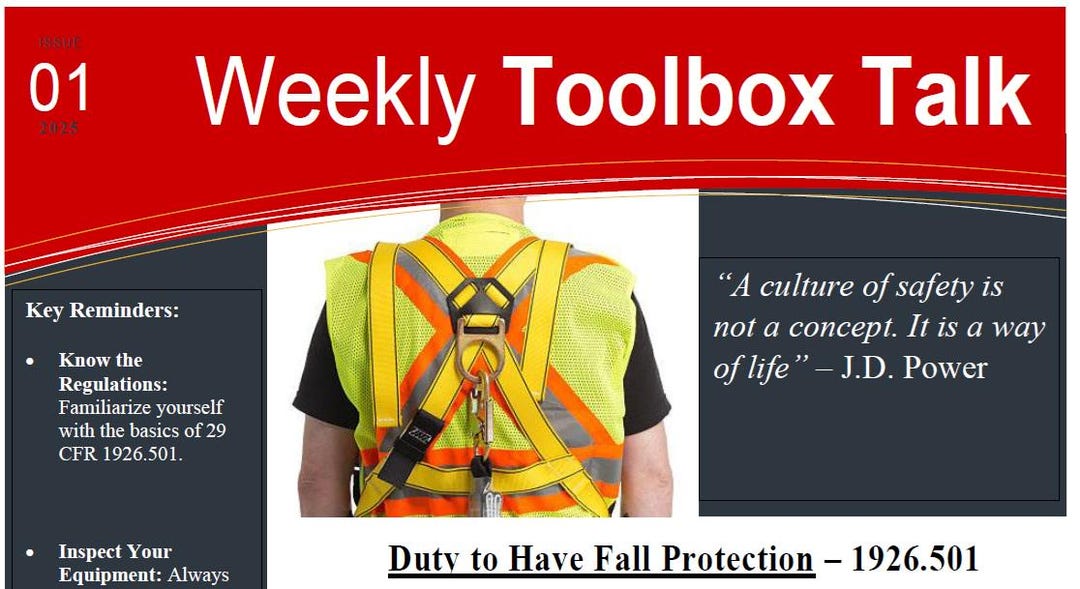
Construction sites move fast. Hazards evolve daily. Yet one of the most effective safety tools remains low-tech, consistent, and free: the weekly toolbox talk. When delivered right — with clarity, relevance, and documentation — these short safety meetings reduce incidents, reinforce protocols, and create a culture where safety isn’t an afterthought. And the easiest way to standardize, distribute, and track them? A well-structured weekly toolbox talks construction PDF.
But too many contractors treat these PDFs as compliance checkboxes. Generic templates. One-size-fits-all content. Handed out once, never updated. That’s not how they’re meant to work.
The real power of a weekly toolbox talk PDF lies in its ability to connect everyday risks with real-time solutions — tailored to the phase of work, crew roles, and site conditions. This guide breaks down how to build, use, and distribute effective PDF talks that crews actually engage with — not just sign off on.
Why Weekly Toolbox Talks Matter — Beyond Compliance
Toolbox talks aren’t just OSHA-friendly paperwork. They’re frontline interventions. Studies consistently show that short, focused safety discussions reduce accident rates by up to 30% on active job sites. When workers hear about a hazard just before encountering it — say, working at height during roof truss installation — the message sticks.
But consistency is the challenge. Foremen juggle schedules, materials, inspections. Without structured support, safety talks get rushed or skipped.
That’s where a construction-specific PDF system becomes essential. It’s not about replacing live discussion — it’s about enabling it. A good PDF provides:
- A clear agenda (5–10 minutes)
- Site-relevant hazards
- Visual aids or diagrams
- Space for attendance and feedback
- A trail for audits and training records
When done right, the PDF becomes the foreman’s playbook — not a bureaucracy burden.
What Makes a Construction PDF Toolbox Talk Effective
Not all PDFs are created equal. Many free downloads online are outdated, too broad, or lack customization fields. The best ones follow a simple but critical framework:
#### 1. Focused Topic, One Per Week Avoid “General Safety” or “Stay Alert.” Target real tasks: Scaffold Safety During Exterior Work, Preventing Struck-By Incidents Near Excavations, Proper Ladder Use on Multi-Level Sites.
#### 2. Relevant to Current Phase of Work A talk about welding fumes means nothing during foundation pouring. PDFs must align with what the crew is doing this week.
#### 3. Visual and Readable Layout Use icons, bold headers, short bullet points. Many workers aren’t reading full paragraphs. Highlight key dos and don’ts.
#### 4. Interactive Elements Include: - Attendance signature lines - Date and location fields - “Hazards We’ve Seen This Week” section - QR code linking to related PPE or equipment guides
#### 5. Editable or Fillable Fields Static PDFs force printing and manual notes. Better versions are fillable — allowing foremen to update topics, add names, and save digital copies.
Without these elements, the PDF becomes another compliance chore. With them, it’s a living safety tool.
Common Mistakes in Using Toolbox Talk PDFs
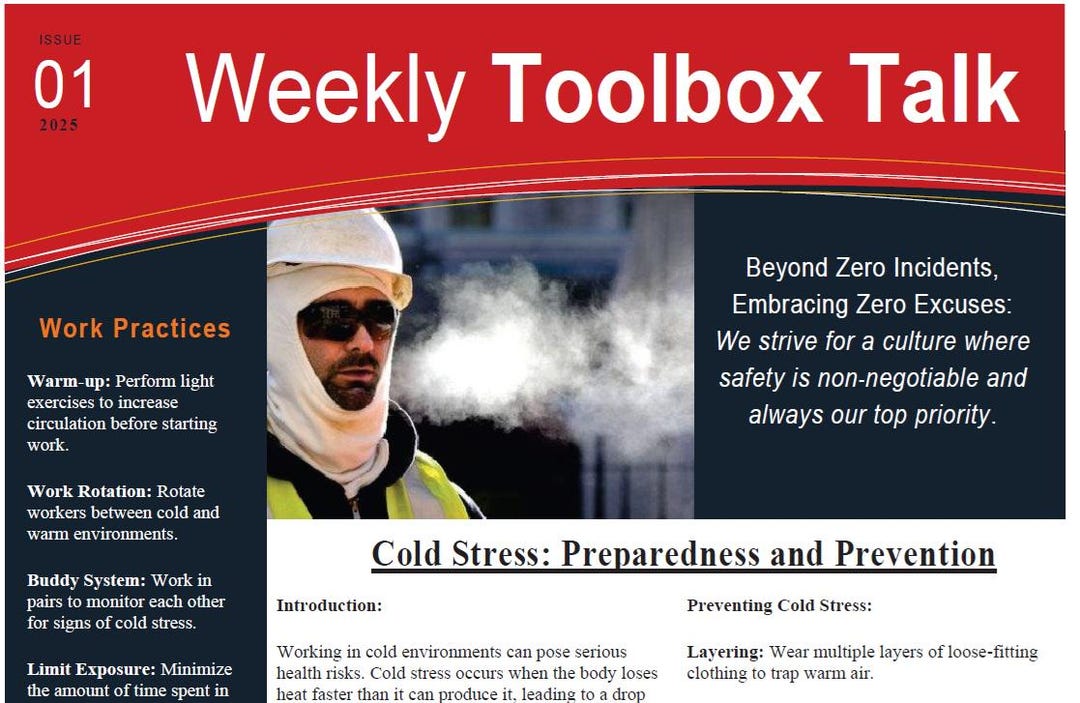
Even with great templates, mistakes sabotage impact. Watch for these:
- Reusing the Same Topic Monthly
- Rotating through the same 12 topics every year ignores project-specific risks. A high-rise job has different hazards in Week 12 vs. Week 36.
- No Worker Engagement
- Reading from a PDF like a script kills engagement. Instead, use it as a prompt: “Has anyone seen this issue on site this week?”
- Skipping Documentation
- A talk that isn’t signed and filed doesn’t exist for OSHA. PDFs with built-in sign-off sections reduce administrative lag.
- Ignoring Non-English Speakers
- On diverse crews, English-only PDFs create gaps. Consider bilingual versions or pairing talks with visual aids.
- No Follow-Up
- A toolbox talk about fall protection should be followed by a site check on harness use. Link the PDF to action.
Avoiding these pitfalls starts with treating the PDF as part of a system — not a standalone document.
How to Build Your Own Weekly Toolbox Talk PDF Series
You don’t need to rely only on free downloads. Creating custom PDFs takes minimal effort and pays off in relevance.
#### Step 1: Audit Your Project Timeline Break the job into phases: excavation, framing, MEP, finishing. Assign hazard themes to each.
| Phase | Weekly Topics |
|---|---|
| Site Prep | Excavation safety, utility strikes, PPE basics |
| Framing | Fall protection, nail gun safety, material handling |
| Interior Work | Dust control, electrical safety, ladder use |
| Final Stages | Hot work permits, fire exits, clean-up hazards |
#### Step 2: Use a Template Structure Each PDF should follow this layout:
- Header: Project name, date, location, foreman
- Hazard Summary: 2–3 sentences
- Key Safety Rules: Bullet points (max 5)
- Discussion Prompts: 1–2 open questions
- Visual: Diagram, photo, or safety symbol
- Sign-Off Section: Names, signatures, printed cards
#### Step 3: Brand and Digitize Add your company logo and safety policy statement. Use free tools like Adobe Acrobat or Canva to make it professional.
Store the series in a shared drive or project management tool — accessible from tablets on site.
5 Top Sources for Weekly Toolbox Talks Construction PDFs
Not every contractor has time to build from scratch. These sources provide high-quality, customizable PDFs:
- OSHA.gov
- Free, government-reviewed topics. Limited customization, but authoritative. Best for baseline compliance.
- SafetyNow
- Offers 50+ downloadable PDFs with fillable fields. Strong on visual design and real-world examples.
- Safetytek
- Industry-specific talks (commercial, residential, industrial). Includes bilingual options.
- Construction Safety Council (CSC)
- Regionally adapted talks. Useful for weather-related hazards and local regulations.
- Trade Association Libraries (e.g., ABC, AGC)
- Members get access to curated PDF toolkits updated quarterly. Often include talking points for supervisors.
Pro tip: Download from multiple sources, then edit them to match your workflow. Don’t just distribute — adapt.
Integrating PDF Talks into Daily Workflow
A PDF only works if it’s used. Here’s how leading crews make it stick:
- Schedule in Advance
- Plan the next 4 weeks of topics during the weekly foreman meeting. Assign responsibility.
- Link to JHA (Job Hazard Analysis)
- Pull hazards directly from active JHAs. Example: If a JHA flags overhead power lines, that week’s PDF talk covers crane clearance zones.
- Use Tablets, Not Printouts
- Load PDFs on iPads or ruggedized Android devices. Foremen open the file, present, collect e-signatures via apps like DocuSign or Adobe Fill & Sign.
- Review Past Talks Weekly
- At the superintendent level, scan last week’s sign-offs. Look for gaps: missed dates, missing names, repeated topics.
- Reward Engagement
- Recognize crews with zero incidents after a month of consistent talks. Tie safety culture to recognition.
This isn’t about collecting signatures — it’s about changing behavior.
Real-World Example: Fall Protection PDF Talk
Let’s say your crew starts roofing work.
Instead of a generic “Fall Safety” PDF, create one titled: “Guardrails, Harnesses, and Roof Edge Awareness – Week of [Date]”
Inside:
- Photo of correct harness attachment
- Diagram of 6-foot fall rule
- Bullet: “No work within 6 feet of edge without protection”
- Prompt: “What’s one time you’ve seen a near miss near an open edge?”
- Sign-off with space for 12 workers
After the talk, the foreman walks the perimeter with the crew, checks harnesses, and tags unsafe zones. The PDF becomes the start of action — not the end of a lecture.
Make Your PDFs Work for You — Not the Other Way Around
A weekly toolbox talks construction PDF should be lean, relevant, and repeatable. It’s not about producing perfect documents — it’s about starting the right conversations at the right time.
The best PDFs aren’t downloaded and forgotten. They’re updated, discussed, signed, and filed — then referenced when incidents occur or audits happen.
Build a library that matches your projects. Customize templates. Train foremen to use them as guides, not scripts. And never treat safety talks as a box to check.
When your crew sees the same topic come up — but adapted to this stage, this site, this risk — they’ll know you’re serious. That’s how culture changes.
Start this week. Pick one high-risk task. Draft a 1-page PDF. Deliver it in the field. Sign it. Save it.
Repeat.
That’s safety that sticks.
FAQ
What should be included in a weekly toolbox talk PDF? A clear topic, key hazards, safety rules, discussion questions, space for attendance signatures, and project-specific details like location and date.
Are free toolbox talk PDFs reliable? Some are, especially from OSHA or industry groups. But always customize them to your site’s current work and hazards.
How long should a toolbox talk be? Keep it 5 to 10 minutes. Focus on one topic. Longer sessions reduce retention and engagement.
Can PDF toolbox talks be digital? Yes. Use fillable PDFs on tablets with e-signature support. This speeds up recordkeeping and improves accessibility.
How often should you do toolbox talks? Weekly is standard. Increase frequency during high-risk activities like crane lifts or confined space entry.
Should all workers sign the PDF? Yes. Signatures confirm attendance and understanding. Missing names create compliance gaps during audits.
Can you reuse the same PDFs every year? Not effectively. Projects change. Reuse templates, but update topics to match current phases and emerging risks.
FAQ
What should you look for in Weekly Toolbox Talks Construction PDF Guide? Focus on relevance, practical value, and how well the solution matches real user intent.
Is Weekly Toolbox Talks Construction PDF Guide suitable for beginners? That depends on the workflow, but a clear step-by-step approach usually makes it easier to start.
How do you compare options around Weekly Toolbox Talks Construction PDF Guide? Compare features, trust signals, limitations, pricing, and ease of implementation.
What mistakes should you avoid? Avoid generic choices, weak validation, and decisions based only on marketing claims.
What is the next best step? Shortlist the most relevant options, validate them quickly, and refine from real-world results.
:max_bytes(150000):strip_icc():focal(749x0:751x2)/met-gala-breakups-050125-76cb9079b6fe4b14ab41729c489ece9c.jpg)